

On October 23, the San Francisco Chronicle forecast remarkably high tides for the Bay Area later that week. Sure enough, the tide peaked at 6.5 feet, setting a new record. The previous record of 6.1 feet lasted a few weeks. The new record lasted one day. That record also spanned 24 hours. From 6.5 to 6.6 to 6.7 feet, the tides broke records in ⅒-foot increments over three consecutive days. This coastal flooding isn’t limited to the Bay Area, either. Extreme tides aggravated by El Niño are eroding beaches up and down the California coast—and could get worse.
Seawater reaches the roadway
A crowd gathered at Pier 14 to watch the Bay cover part of the Embarcadero south of the Ferry Building. Passersby took photos of the water lapping up and over the pavement’s edge. Port of San Francisco employees put up temporary barricades around the waterfront, stringing caution tape between railings. But the seawater backed up a storm drain, spilling onto the sidewalk and finally the roadway itself. Onlookers linked the scene with climate change and overdependence of carbon-based fossil fuels.
While the high tides of October 28 eventually receded, tidal gauge monitor RaceAtlas anticipates 6’+ swells will return November 6–11. ABC7 News interviewed climatologists who foresee more, worse flooding due to stronger, wetter storms fueled by El Niño. Sea surface temperatures in the Central and Eastern Pacific soar during an El Niño event, powering violent hurricanes. The waves they generate travel well outside their spinning cores, shearing shores untouched by the storms. Beachgoers in San Diego must climb massive sand berms to see the water.
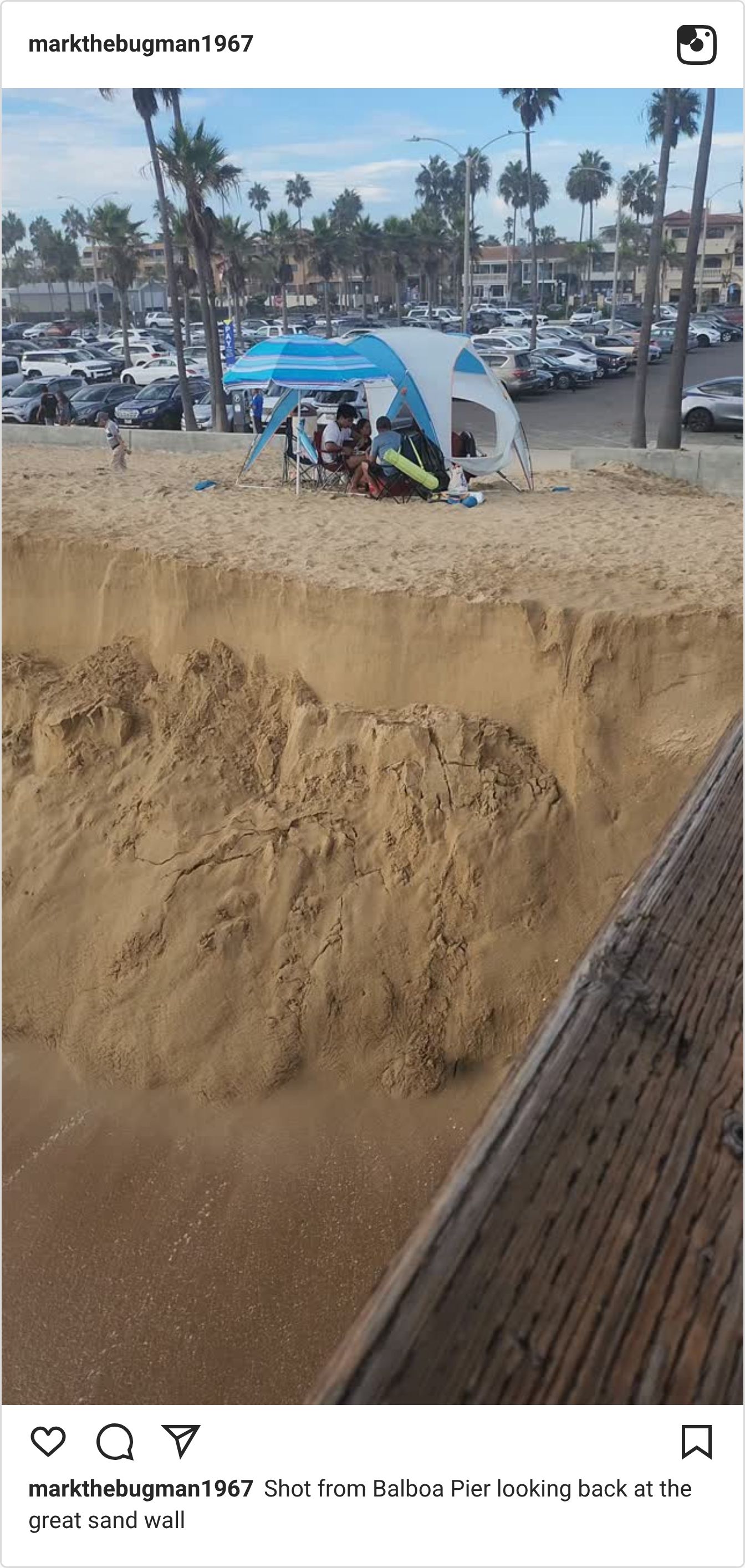
A recent science.org study found burning fossil fuels have made El Niño events more frequent and intense. The increased sea surface temperatures mean El Niño itself can exacerbate global warming. A positive feedback loop occurs, fueling monster hurricanes and severe storms that ravage shorelines near and far. Even inland populations are feeling the effects. Monsoons and hurricane remnants swept over Arizona and New Mexico, dropping torrential rains and multiple tornadoes.
It doesn't help that since 2025, Trump has dismantled numerous organizations and regulations designed to mitigate climate change. Trump revoked California's Clean Air Act vehicle waivers, undermined the California Coastal Commission, and axed the National Climate Assessment’s budget. While the “blue wave” (which seems to have skipped California) offers hope, incoming officials won’t hold office until 2027.
Stormy weather ahead
Meanwhile, parts of the Bay Area are already underwater. Rising tides flooded parts of Sasaulito, with streets and walkways submerged deep enough for kayakers to paddle. UC Davis identified other floodprone parts of the Bay: Highway 101 within Corte Madera, San Rafael's Canal District, the eastern approach to the Bay Bridge, SFO, and OAK. San Francisco’s flood-prone districts are well-known: the Marina and Crissy Field, portions of North Beach, the Embarcadero, and Mission Bay.

More than 26.7 million people live along the California coast—67% of the state’s population. Los Angeles is home to the largest seaport in the United States. Our state contains 17 major fishing ports, including Eureka, Santa Barbara, and Crescent City. Smaller communities like Bodega Bay and Morro Bay depend on the fishing industry. San Diego is a US Navy hub while San Francisco is a tech hub and tourist magnet. Every single location relies on the health and safety of its ports and waterfronts to survive. And the winter storms are just getting started.
California's Fifth Climate Change Assessment warns of further atmospheric instability fueled by global warming. We could see longer summers, hotter daytimes, greater droughts, and too many wildfires to count. Winter storms may worsen, causing severe flooding and coastal erosion. The fluctuating weather threatens to disrupt wildlife patterns already stressed by encroachment and habitat loss. A shrinking Sierra snowpack immediately translates to less water for life in general.
You’ve heard it from hippies and climatologists alike: It’s all connected. In the best case, it could mean synergy between all living things. But in this case, the fact of our unbreakable connections becomes the avenue of our demise. It means nobody will be untouched by a worsening climate, that if California goes down, we all go with it.
With that in mind, should the future habitability of Earth depend on which politician holds office?


