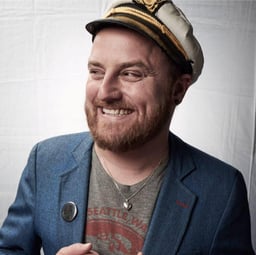
Friday morning, SFPD arrested 20-year-old Daniel Alejandro Moreno-Gama for reportedly lobbing a Molotov cocktail at A.I. mogul Sam Altman’s home. The ensuing blaze burned the front gate of Altman’s Russian Hill residence before being extinguished shortly after 4 AM. Next, the suspect went to OpenAI’s Mission Bay headquarters, which he allegedly threatened to burn down. Police booked him on suspicion of arson, possession and manufacture of an explosive device, making criminal threats, and attempted murder.
While the media analyzes Moreno-Gama, I’m intrigued by a sentiment of his they’re attaching to the inflammatory deed. “We are close to midnight,” he expressed on A.I.-critical forum PauseAI. “It’s time to actually act.” What did he mean by midnight? And what does it look like when people act effectually?
“Close to midnight”
Both the Chronicle and the Tweet that doxxed the suspect’s PauseAI profile prominently featured his reference to midnight. PauseAI is part of a growing movement to regulate generative A.I. and forestall “the existential risks from artificial intelligence.” Oddly, neither Twitter nor the Chronicle elaborates on the grabby headline material. For those who recognize the phrase, the connection is glaring. What the suspect in custody was referring to is no ordinary countdown. Moreno-Gama was referring to the Doomsday Clock.

Bulbs of radioactive fire rise on twisting columns of smoke some twenty thousand feet over the cities of Hiroshima (left) and Nagasaki (right). Creative commons.
By 1947, Manhattan Project scientists had two years to reflect on the horrors they unleashed on Japan. They harnessed the power of the atom, learned its terrible secrets, and within months of the bombings, witnessed the results. Bodies of children contorted in carbonized agony, mothers curled around blistering infants, hands poking from rubble, fingers lit like candles. Then, the radiation: a legacy of cancer, leukemia, keloids, stillbirths. And no one outside of Hiroshima, Nagasaki, the US president, and the scientists who made the bomb knew about it.
Those scientists saw an urgent need to educate the planet about this new and terrifying power. Together they founded the Bulletin of Atomic Scientists, and began publishing a newsletter that circulated among their colleagues. But how to encapsulate the almost indescribable horror that is a countdown to nuclear Armageddon? What symbol could communicate finality on a globally legible scale? Rather than concoct something new, they graffed that sense of dread onto a sign that already exists. They chose something ominous yet simple, banal as it is universal: time, but specifically, the clock.

Cover of the Bulletin of the Atomic Scientists, First edition. June 1947. Creative commons.
“The Bulletin's Clock is not a gauge to register the ups and downs of the international power struggle; it is intended to reflect basic changes in the level of continuous danger in which mankind lives in the nuclear age.”
Nudging the minute hand
At any given time, the Doomsday Clock is as forgiving of humanity as we are. Whether it moves, in whatever direction, is up to us. “Zero hour” means any irrecoverable global cataclysm: nuclear exchange, global warming, and hazards presented by artificial intelligence. The Bulletin updates the Clock every year according to a collective, informed consensus about the state of the world. “Time” on the Doomsday Clock is not reflective of actual time, nor is it fixed. Improvements like disarmament and stockpile reductions push the minute hand back, returning precious lost time to our hands. And that gift is ours to throw away.
The US military, still jazzed from winning World War II, believed the Soviet Union was years from building a bomb. They were wrong. Soviet spies acquired the specs for an implosion-type bomb (the one used against Nagasaki), and built it. Russia’s first nuclear test in 1949 scandalized our military and triggered an international arms race known as the Cold War.
The arms race also marked the Clock’s first movement; unfortunately, not away from zero hour, but way closer. Our precious time on Earth shrank by four minutes, from its inaugural post-WWII setting at 11:53 to 11:57 PM—three minutes to midnight.

Our first close run at midnight came in 1953, when the United States, followed by the Soviet Union, detonated the first hydrogen bombs. In 1945, implosion produced the main event at Nagasaki: a 22-kiloton blast that killed every living thing within a mile radius. By 1953, implosion had become the on-switch for a much bigger, far brighter light. Hydrogen bombs are so powerful, they use the detonation of an implosion-type bomb as a trigger. The resulting blast radius is closer to twenty miles. These incredibly violent weapons prompted the Bulletin to adjust the Doomsday Clock to 11:58 PM—two minutes to midnight.
For almost eighty years, the Bulletin has faithfully tracked the world’s unsteady teetering on the edge of oblivion. The furthest from midnight we got was in 1991. Following the end of the Cold War, humanity stood a whole seventeen minutes away from utter destruction. With one modest giveback in 2010, it has only crept back down. Now we stand even closer to midnight than ever, at 11:58:35 with 85 seconds to go.
What to do with the time we have left?
With that in mind, it’s no wonder Daniel Alejandro Moreno-Gama of Spring, Texas, went all Sarah Connor on us. In this comparison, OpenAI is Skynet, and Sam Altman is Dr. Miles Bennett Dyson. And we’re the kids in the park overlooking Los Angeles. She’s banging on the chain-link fence, but not one of us bothers to look up.
Moreno-Gama’s quote doubles down on ‘act,’ saying, “It’s time to actually act,” adverbializing the verb, effectively multiplying it by itself. That chaotic formula gets you action redoubled but with no channels or direction, like fire or unbridled electricity. Or a Molotov cocktail. Caliber-wise, one alone was unlikely to burn down Sam Altman’s cliffside fortress. But what if that wasn’t the goal? However ineffective his plan’s execution, something is ablaze nonetheless: the desiccated hopes of disenfranchised working-class Americans. What if the true objective of Friday night’s arson was illuminating the unstoppable force within us all?
Before the weekend was through, a second attack on Sam Altman’s life and property transpired, this time by gunfire. Meanwhile, a protest burning of a Kimberly-Clark warehouse in Ontario, California potentially inspired other disgruntled workers to follow suit. Moreno-Gama did not specify when he called upon his peers to “actually act.” Still, pauseAI platform moderators warned that “advocating for violence in any form is grounds for a ban.” The 20-year-old even expressed gratitude for the platformers and their real-life work, but still voiced his concerns: “Do you really think we have any time left?”

Not much, Mr. Moreno-Gama. We are so close to midnight, we’ve started counting down in seconds. As a literal demented president with full nuclear access continues threatening the Middle East, it makes sense to worry. Why shouldn’t people faced with the drastic annihilation act drastically to prevent it? I agree—time is running out, and it will if nothing changes—but it isn’t Doomsday quite yet. Unlike with real time, this clock can be turned back.