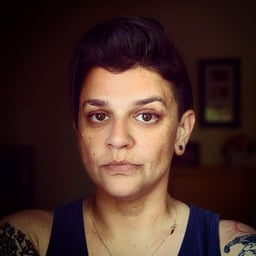
Photo by bankrobber1 via Wikimedia Commons
by Sayre Piotrkowski
This originally appeared on the Beer & Soul Substack.
“While there is a lower class, I am in it, while there is a criminal element, I am of it, and while there is a soul in prison, I am not free.”
“This is for my folkers who got bills overdue / This is for my folkers, on check one two / This is for my folkers who never lived like a hog / Me and you, toe to toe, I got love for the underdog.”
Boots Riley’s second feature film, I Love Boosters, arrives in more than 2,000 theaters later this week. The film follows his critically acclaimed debut, Sorry To Bother You, and his surrealist comedy miniseries, I’m A Virgo, not only chronologically, but also as the third installment in an Oakland-set satiric trilogy that draws its comedy, drama, and poignancy from the contradictions and absurdities of capitalism.
Capitalist critique has been Boots’ artistic project from the very beginning. The Coup’s debut album was titled Kill My Landlord. Throughout the 35-year creative career that has followed, Boots has shifted methods — Pick a Bigger Weapon was the title of The Coup’s 2006 LP — but the underlying project has remained remarkably consistent.
Over the past eight years, Boots Riley’s weapon of choice has been popular cinema. As a filmmaker, Boots is a satirical surrealist unafraid to embrace the absurd. As a lyricist, however, Boots’ narratives were generally more grounded, drawing on the realities of survival in a capitalist world.
When I first encountered Boots Riley, staring back at me from the cover of Steal This Album in November of 1998, almost all the rap music I loved spoke of places I had never been and character types I had yet to encounter. I was 17, and hip-hop already occupied an enormous place in my life, but I lived in suburban Sonoma County and had only just begun taking regular trips into San Francisco for all-ages shows at Maritime Hall.

The logo on the back of the Steal This Album promo CD was so compelling that I bought the album without ever having heard their music. Inspired by an image of an Angolan freedom fighter, The Coup’s iconic logo depicts a nursing mother in silhouette with a shotgun slung across her back. Even before I understood the group’s politics, the image communicated something unusually complete: the proximity of care and militancy, a revolution that was inseparable from survival, tenderness forced to share space with violence.
Around the same time, Outkast’s Aquemini transported me into the place they would later call “Stankonia,” a setting that somehow felt simultaneously like Atlanta, a dungeon, and the cosmos, while Jay-Z’s Vol. 2 and Black Star’s debut album took me to two entirely different places, both called Brooklyn. Back then, the Oakland depicted on Steal This Album felt just as vivid and mythic to me as Stankonia, the Marcy Projects, or “Brooklyn, New York City, where they paint murals of Biggie.”
In the years since, I have made Oakland my home, and many of the locations and personalities that appear in Boots’ oeuvre are now intimately familiar to me. Even before I moved here, I started running into Boots. We shared a couple of stages and once, a recording studio (more on that later). For years, I lived at 40th and Market, just up the street from the Pam The Funkstress mural. When she passed in 2017, the neighborhood danced in the street in front of the mural during a massive block party in her honor. In 2019, I worked a campaign event for Bernie Sanders in a Fruitvale coffee shop alongside Boots’ father, the tireless civil rights attorney Walter Riley.

A mural of Pam The Funkstress is located on the corner of 30th St and West.
Before any of that. Before “Me and Jesus The Pimp In A ’79 Granada Last Night” became widely recognized as one of the great narrative achievements in hip-hop history and inspired a novel. Before the prophetic controversy surrounding The Coup’s Party Music cover art. Before the tour bus crash. Before Boots eulogized Pam. Before Sorry To Bother You. Before I’m A Virgo. Before I Love Boosters.
Before I had even heard of him, Boots Riley was rapping about the mirror in his pocket.
The Mirror in Boots Riley’s Pocket
One of the best essays you will ever read about a single rap song is Kiese Laymon’s 2013 retelling of discovering The Coup’s debut single “Not Yet Free.”
Apparently, it took Kiese Laymon just one viewing of The Coup’s first music video to immediately understand something lesser critics can still miss: The Coup was never merely making “conscious” rap. They did not scold their fellow hip-hop artists. They didn’t promote any form of sectarianism. They were operating with a full grasp of a moral and philosophical framework that has allowed Boots’s art to remain consistent and durable across 35 years.
“Not Yet Free” includes the first deployment of the most enduring symbol in Boots’ lyrical repertoire: the mirror in his pocket.
“Everyday I pull a front so nobody pulls my card / I got a mirror in my pocket, and I practice lookin’ hard.”
It is one of the most revealing lines in rap history, conveying “hyper-awareness of our hyper-awareness,” as Laymon puts it.

Boots, E-40, and Tupac Shakur on the set of “Practice Lookin’ Hard”. Photo shared by E-40
Most rappers employing similar imagery might use the mirror to convey either flyness, as Slick Rick did, or invulnerability, as E-40 would on his 1993 single “Practice Lookin Hard,” which samples Boots’ voice from “Not Yet Free,” and as Mystikal would when responding to critics who compared his rapping style to 40’s. But for Boots, the mirror exposes hardness as requiring rehearsal: masculinity performed under the precarity that accompanies poverty.
The mirror appears again on “Fat Cats and Bigga Fish” from The Coup’s second LP, Genocide & Juice. Boots revisits the image:
“Sneaky motherfucka with a scam, know how to pull it / Got a mirror in my pocket, but that won’t stop no bullets.”
The mirror can help you fashion an image. It cannot protect you from material reality.
Later in that same song, Boots’ fascination with reflection extends beyond explicit references to his mirror, as one of his greatest stanzas treats Oakland itself as a reflective surface:
“The street light reflects off the piss on the ground / Which reflects off the hamburger sign that turns round / Which reflects off the chrome of the BMW / Which reflects off the fact that I’m broke, so what the fuck is new/”
Wealth reflects poverty. Performance reflects both aspiration and insecurity. Desire reflects humiliation. Oakland becomes a hall of mirrors.
By Steal This Album, the mirror itself becomes weaponized:
“I’m risin like the vapors from the dank / Fuck the mirror in my pocket, had to break it for a shank.”
The mirror begins as a performance aid and, by the end, becomes an improvisational tool for survival. As everything must.
“They’d Tear This Motherfucker Up If They Really Loved You”
Much of rap, by necessity and design, revolves around the self: self-invention, self-preservation, self-glorification. Boots’s lyrics have always widened that frame. The Coup tells stories not about extraordinary individuals, but about workers, hustlers, single mothers, incarcerated fathers, neglected kids, and the social conditions that shape us all.
As Boots explained in a 2018 interview with Jesse Thorn:
“It’s being able to cause empathy in the person you are talking to, which allows them to see an analysis of the world through your eyes… I always was a fan of taking people on that journey, and taking those journeys myself.”
Nowhere is that artistic project more fully realized than on “Underdogs,” which I believe is the single greatest song about poverty released in my lifetime.
“I raise this glass for the ones who die meaninglessly
And the newborns who get fed intravenously
Somebody’s mama caught a job and a welfare fraud case
Now when she breathe she swear it feels like plastic wrap around her face
Lights turned off and it’s the third month the rent is late
Thoughts of being homeless, crying till you hyperventilate
Despair permeates the air then sets in your hair
The kids play with that one toy they learned how to share
Lights turned off and it’s the third month the rent is late
Thoughts of being homeless, crying till you hyperventilate
Despair permeates the air then sets in your hair
The kids play with that one toy they learned how to share
Coming home don’t ever seem to be a celebration
Bills stay piled up on the coffee table like they’re decorations
Big ol’ spoons of peanut butter, big ass glass of water
Makes the hunger subside, save the real food for your daughter
You feel like swinging haymakers at a moving truck
You feel like laughing, so it seems like you don’t give a fuck
You feel like getting so high you smoke the whole damn crop
You feel like crying, but you think that you might never stop
Homes with no heat stiffen your joints like arthritis
If this was fiction, it’d be easier to write this
Some folks try to front like they so above you
They’d tear this motherfucker up if they really loved you.”
What makes “Underdogs” extraordinary is the song’s refusal to isolate suffering. Boots never presents poverty as a calamity befalling particular individuals, a moral weakness, or a spectacle. It is the condition capitalism imposes upon the majority of the world, one that can only be changed collectively.
In that same 2018 Jesse Thorn interview, Boots held back tears as he revealed that the writing of “Underdogs” began as an attempt to write a diss track aimed at a friend and collaborator.
“He went by the name Point Blank Range. And he died recently. Like, a couple years ago. But something had happened where he had kind of scammed my father out of a couple hundred dollars. …I started out writing, like, a diss song about it. And just, while writing that, thinking about his life… And (how) he kind of lived, hustling and sometimes betrayed his friends. And this was me writing a song that came from understand—[his voice breaks] an understanding of a whole situation that he was in.”

And this is what the mirror in Boots Riley’s pocket reflects. Not Boots himself, but all of those who capitalism demands perform hardness in order to survive.
“Microsoft Motherfuckers Let Bygones Be Bygones”
If the mirror in Boots Riley’s pocket reflects the ways in which capitalism forces people toward performance and away from solidarity, then “Me and Jesus The Pimp In A ’79 Granada Last Night” reveals how those performances harden into identities and economies, and ultimately, become lethal.
Released on Steal This Album in 1998, the song is a murder ballad, short film, feminist parable, revolutionary manifesto, and Greek tragedy, all in one. Over the course of eight minutes, Boots tells the story of a son confronting the one-armed pimp who murdered his mother and stood in as his father.
"From the pen he would scribe on how to survive
Don’t be Microsoft, be Macintosh with a Hard Drive
Used to tell me all the time to keep a bitch broke
Did I mention that my mama was his number one ho?”
The song’s achievement is not merely technical, though its structure is astonishing. Boots uses suspense, ambiance (a sample of P-Funk vocalist Glenn Goins asking a 1976 Coliseum crowd, “Oakland, do you wanna ride?” is heard on the chorus), dialogue, imagery, humor, memory, and ultimately revelation to keep us on the edge of our seats until the song reaches its climax:
“Pulled into a vacant lot, the road to recovery
Pulled out my pistol as we brushed against the shrubbery
Jesus said, “Why the hell you pointin’ a gat?”
So I pulled a piece of game I could use out the hat
I said, “This trip is over, we ain’t finna ride on
This is for my mental and my mama that I cried on
Microsoft motherfuckers let bygones be bygones
But since I’m Macintosh, I’mma double click your icon”
He struggled for life, then gave up the fight
Me and Jesus the Pimp in a ‘79 Granada last night”
One of the most surreal hip-hop moments I ever witnessed firsthand took place on February 22nd, 2005 — the day after I turned 24 — inside a recording studio in North Oakland, not far from where Mistah FAB grew up.
FAB was in the midst of the run-up to the release of Son Of A Pimp, an album deeply rooted in Oakland street mythology that would become one of the defining documents of the hyphy era. Boots Riley showed up with a Macintosh laptop.
Both emcees were there to add verses on a remix of my friend Ashkon’s single, “510.” At some point during the session, a member of Mistah FAB’s entourage reacted with astonishment when he learned that FAB had never seen the video for “Me and Jesus The Pimp In A ’79 Granada Last Night.” Moments later, a crowd gathered around Boots and his computer as the music video played.
Shortly after the recording above cuts off, the song reached a chorus. As Glenn Goins called “Oakland, do you wanna ride?” and the 1976 crowd could be heard responding. East Oakland MC, and producer, Mr. Tower, gestured to the entire group huddled around the laptop and exclaimed, “That’s every one of our mamas screaming right now.”
The room erupted.
Even today, more than twenty years later, the symbolism of that moment feels almost impossibly dense.
Here was Boots Riley, the most unwavering anti-capitalist in hip-hop history, screening hip-hop’s most devastating critique of pimp mythology, for one of Oakland’s brightest rap stars, ahead of the release of an album called Son Of A Pimp.
And he was doing it on a Macintosh laptop.
“Me and Jesus The Pimp…” is not an outsider’s condemnation of street culture. It is a parable that illustrates why liberation and exploitation are inherently incompatible.
“And I don’t think that it’s gonna end till we make revolution
But who gonna make the shit if we worship prostitution?
Ain’t no women finna die for the same old conclusion
Put they life on the line so some other pimp could use ‘em”
Boots understood that the pimp and the revolutionary emerge out of the same economic abandonment.
And unlike so many rappers who are content to reproduce myths, Boots interrogated them without ever withdrawing his love for the people trapped inside.
“Fishing Villages Make Fishing Songs”
One of the great consequences of Boots Riley becoming a cinematic cult favorite is that we now have more opportunities to hear him explain his politics, his art, and their relationship. And in these interviews, Boots is often asked to answer the same question from opposite directions.
Some interviewers want to know how an avowed communist reconciles making films with major studios and corporations. Others ask why more working-class people do not engage with explicitly revolutionary art.
My favorite response to the latter question came in 2018, when I watched Boots interviewed alongside Questlove at City Arts & Lectures in San Francisco.
“Fishing villages make fishing songs,” Boots said.
He was casting doubt on the notion that “art alone can change the world” and explaining why revolutionary music often rings hollow to many listeners.
“What creates culture is what people do while they’re surviving. … fishing villages create fishing songs. You can go to an agricultural village and teach them a fishing song; they might think it’s catchy. They might even sing along sometimes. But eventually they are gonna say, ‘Nah, I want that real shit. We need that song about digging dirt.’”
Boots knows that culture only becomes durable when it emerges organically from collective experience. This is why The Coup’s music has endured while so much explicitly “political” art from the 1990s now feels trapped in amber. No one ever did “paint the White House black,” hip-hop never “built its own secret society.” Unlike Ice Cube or KRS-One, Boots’ lyrics never positioned him apart from the people he was speaking to. On the contrary, Boots’ work has always espoused the often unfashionable belief that most people, even those participating in ugly systems, understand on some level that something is wrong.
In another 2018 conversation, this time with the Oakland poet and screenwriter, Chinaka Hodge, Boots told a story about Rage Against The Machine filming the video for “Sleep Now In The Fire” on Wall Street with director Michael Moore.
The idea was simple: Rage would perform in the financial district until police or financiers shut the shoot down, and Moore would have a cinéma vérité moment of state power shielding capitalism’s champions from a revolutionary soundtrack. Instead, after several takes, hundreds of Wall Street workers came pouring into the street, chanting:
“Suits! For! Rage! Suits! For! Rage!”
Boots loved the story. What struck him was not hypocrisy, but recognition.
“What it seems to be is that everybody wishes we had a different world.”
That observation reveals something essential about Boots Riley’s work. No matter the volume or eloquence of our denunciations of oppressors, denunciation alone is not love for the oppressed. Boots’ art has always begun from the premise that capitalism alienates people from one another and from their better selves.
Even at their most radical, The Coup’s songs remained grounded in recognizable human behavior: sneaking in, driving a broken-down car, flirting with the cashier to get a free hamburger. The villains in their stories are bosses, repo men, cops, and aspiring bourgeoisie. But more often than not, Boots understands the villains are victims too. They are trying to survive, and they, like the rest of us, need a solidarity powerful enough to free them from the roles they have mistaken for identities.
In that same conversation with Chinaka Hodge, she revealed that her favorite Coup song was “Wear Clean Drawers,” a tender track Boots wrote for his then three-year-old daughter. Hodge said it was the first song she included on a Father’s Day mix for her own father, longtime Oakland community activist Greg Hodge, when she was still a teenager.
Boots responded by explaining that the song marked a creative breakthrough for him:
“I realized I could write songs that had to do with my personal day-to-day life and if I was honest about it, then my view of the world would come into play.”
The song opens:
“You know you’re my cookie baby and you’re too smart
I can read it in the lines of your school art
True heart, I mean courage, expressed with care
Go on draw them superheroes with the curly hair”
Three years later, it was announced that Disney had tapped Hodge to create Ironheart, a miniseries centered around a young Black female superhero. The connection feels less coincidental than illustrative of the same current that has run through Boots Riley’s work for decades: radical politics grounded in solidarity, protection, imagination, and survival belong in every story.
And on a few precious occasions over the past quarter-century, I have watched Boots’s work function as intended. Like a magnet.
I have seen and heard tell of organizers using Coup songs to pull people toward anti-racist, anti-capitalist, and feminist politics, and of workplaces that screened Sorry To Bother You as part of unionization drives.
I was there in June of 2020, when Boots Riley stood alongside Angela Davis at the Port of Oakland during an action organized by the International Longshore and Warehouse Union in solidarity with the Movement for Black Lives.

Boots addressed the crowd gathered at Oscar Grant Plaza before we marched on to the Port of Oakland
One of the founding members of The Coup, E-Roc, was himself a longshoreman and ILWU member. Boots had spent decades making art about workers, hustlers, and survival in Oakland. Now he stood at the port, in the middle of a massive labor action, alongside one of the most visionary and indefatigable living revolutionary thinkers in American history. That day, it felt like Boots Riley had found himself in a fishing village.
One he had helped build.
And one he helped many of us find.
“Have Something You Are More Passionate About Than Your Art”
This coming weekend, I Love Boosters will open in more than 2,000 theaters nationwide. That means Boots Riley is bigger than ever before. A few days ago, he appeared on The Daily Show to promote the film and offered this clear single-sentence explanation of his entire artistic career:
“Have something you are more passionate about than your art.”
That sentence explains nearly everything contained in this post. It explains the durability of Boots Riley’s politics. It explains why Sorry To Bother You, I’m A Virgo, and now I Love Boosters feel spiritually continuous with Kill My Landlord, Genocide & Juice, and Steal This Album despite dramatic shifts in medium, method, audience size, and budget.
It also explains why Boots Riley’s work feels more necessary now than it did in 1998. Why the art never ended up contradicting itself or calcifying into an artifact.
The crises he spent decades describing are harder to ignore than they were 35 years ago. The precarity, alienation, loneliness, indebtedness, spectacle, privatization, mass manipulation, labor exploitation, and moral exhaustion depicted on “Not Yet Free” now constitute ordinary American life for millions of people who once imagined themselves safely outside those conditions.
In our contemporary culture, where outrage so often substitutes for action, and denunciation substitutes for solidarity, Boots continues to recognize the humanity in people shaped by ugly systems. The hustler. The debtor. The booster.
Over 35 years, Boots Riley has consistently refused to let suffering go unseen while also refusing to let the systems that produce it remain unnamed. His work refuses to condemn its characters for adapting poorly to unbearable conditions.
I was lucky enough to attend one of the advance screenings of I Love Boosters. The film is uproariously funny. Chaotic. Stylish. Surreal. Manic. Lustful. Grotesque. Like the previous two installments in Boots’ Oakland trilogy, it understands that capitalism itself is absurd theater, and the satire lands because Boots loves all of us who are trapped inside the performance.