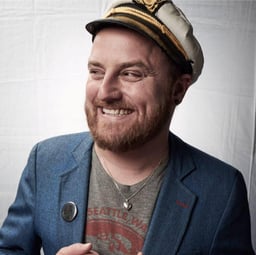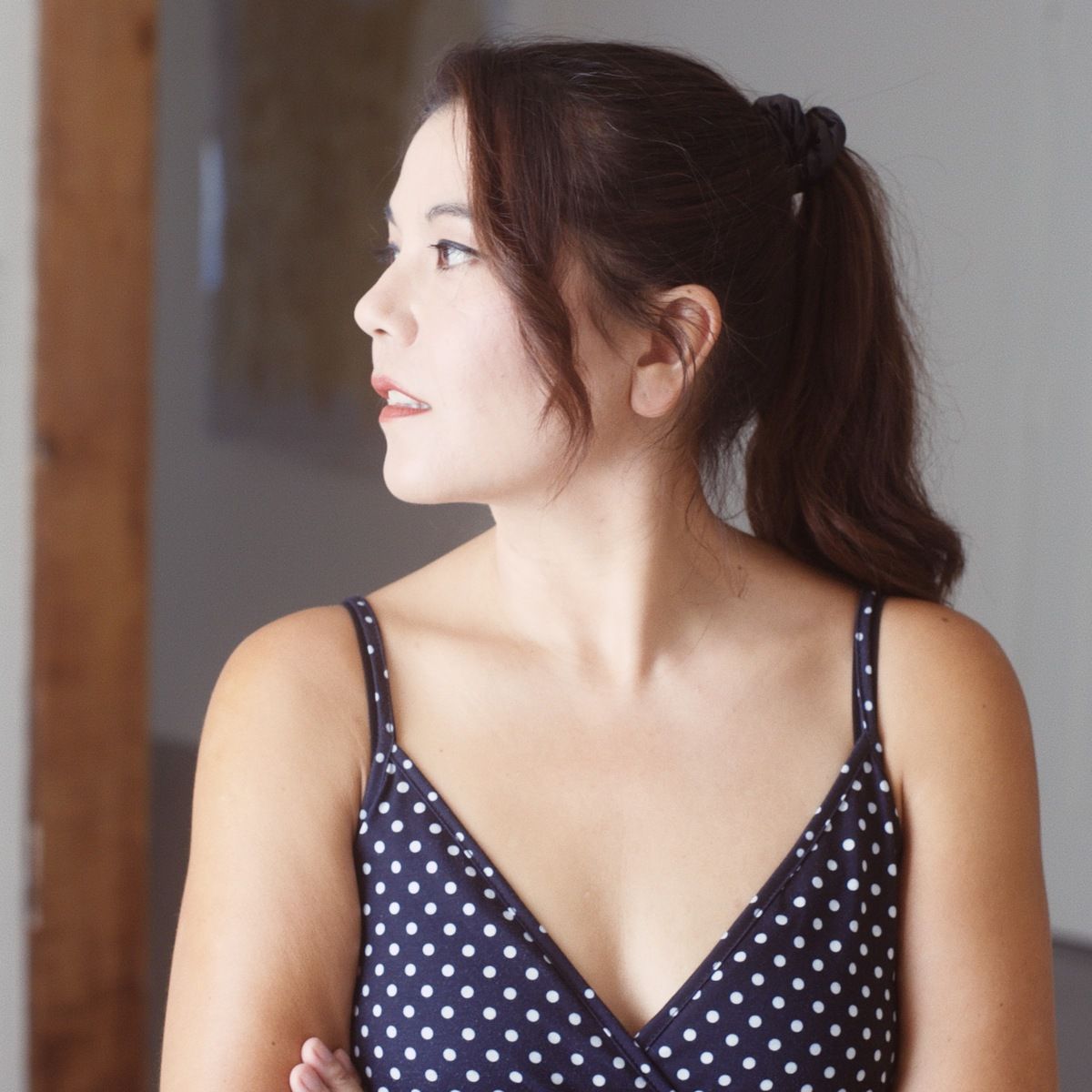

Berkeley Art Center’s show “PULLEY” display works in Collaboration with the artists of NIAD Art Center and artist/curator Christopher Robin Duncan. Photo by Vita Hewitt.
The Berkeley Art Center sits at the end of a wooden bridge, surrounded by lush trees. Inside, PULLEY: A Collaborative Exhibition with NIAD Art Center, which offers a vibrant exchange of ideas, material, and process between NIAD artists and Oakland-based artist/curator Christopher Robin Duncan waits just inside it's doors.
Brightly colored cloths holding faded sunbursts of light line the back wall, paired with whimsical ceramic sculptures in front. Woven clay and faces emerging from behind rainbow veils of glaze rest on plinths. Each piece stands on its own, yet all seem to be in quiet conversation, their individual rhythms creating a visual pulse throughout the room.

A shirt weathered by the elements hangs on the pulley at Berkeley Art Center. Photo by Minoosh Zomorodinia.
NIAD Art Center, originally named the “National Institute of Art & Disabilities” and located in Richmond, began as an institute exploring new methods of creation for artists with developmental, intellectual, and physical disabilities. Its programs encourage “acceptance rather than assimilation of artists with disabilities.” Duncan, known for using the sun, moon, tide, and time as collaborators in his practice, worked with NIAD artists in 2023 to produce new pieces rooted in both chance and patience.
Artists Arstanda Billy White, Deatra Colbert, Felicia Griffin, Karen May, Mat Van Dongen, Mireya Betances, Peter Harris, Richard Naranjo, Shantae Robinson, Shawn Sanders, Sylvia Fragoso, and Duncan prepared fabrics that were attached to a pulley and raised to the building’s roof. There, the works were left to interact with light, wind, and weather, either suspended in air or wrapped around ceramic sculptures for months at a time.

Richard Naranjo’s work in orange speaks to his memories of Vietnam and New Mexico. Photo by Minoosh Zomorodinia.
A bright orange work by Richard Naranjo evokes a lush farmland, alive but unruly. “I saw the way the fabric had turned bright red and orange, and those are the same colors that I see when I have what I call my Vietnam flashbacks. It’s like I’ll be sitting here and all of a sudden everything will turn red. Sometimes it feels like rage,” says Naranjo. “The plants and the pueblos help me calm down and clear my head.” His work, like much of the show, moves between memory and material, emotion and light.
At one end of the gallery, a weathered wooden bench is attached to the pulley that gives the exhibition its name. “When the fabric was going up, it was on a string... and Kitty said, ‘It’s time to wheel and deal!’” recalls artist Karen May, whose practice draws on dialogue with her inner voice, “Kitty,” a blend of cat and childhood self.
Curator and artist Christopher Robin Duncan brings together these varied works into a thoughtful and cohesive whole. The exhibition feels peaceful, tactile, and communal, honoring both the elements that shaped the art and the artists who trusted those forces.
PULLEY runs at the Berkeley Art Center through November 16 and will host an Artist Conversation, book launch, and Potluck in the Park on November 15.
To learn more about shows, classes, and programming at the Berkeley Art Cente,r visit their website.